




If your lawn looks thin, worn out, patchy, or less vibrant than it did earlier in the year, you may be wondering what it actually needs.
Should you aerate it?
Should you overseed it?
Or should you do both?
The difference between aeration vs overseeding is simple once you understand what each service is designed to accomplish. Aeration improves the growing environment underneath the grass. Overseeding adds new grass seed to increase turf density. They solve different problems, but when a lawn has both compacted soil and thin grass, combining them can be an effective way to help the lawn recover.
For homeowners in Mooresville, Huntersville, Cornelius, Davidson, Troutman, Sherrills Ford, and the surrounding Lake Norman area, fall can be an important time to evaluate the condition of the lawn and determine whether aeration, overseeding, or a combination of both makes sense. P&G Landscaping provides professional lawn care and aeration and overseeding services throughout these North Carolina communities.
The key is not choosing the service with the most impressive-sounding name. The key is choosing the treatment that addresses the actual problem.
Aeration vs Overseeding: The Difference in One Minute
Think of your lawn as a living system.
The soil is where the roots need access to air, water, and nutrients. The grass itself is the plant that needs enough space and resources to grow thick and healthy.
Aeration works on the soil.
Overseeding works on the grass.
Core aeration uses specialized equipment to remove small plugs of soil from the lawn. Those openings can improve the movement of air and water into the root zone while creating additional space for roots to develop.
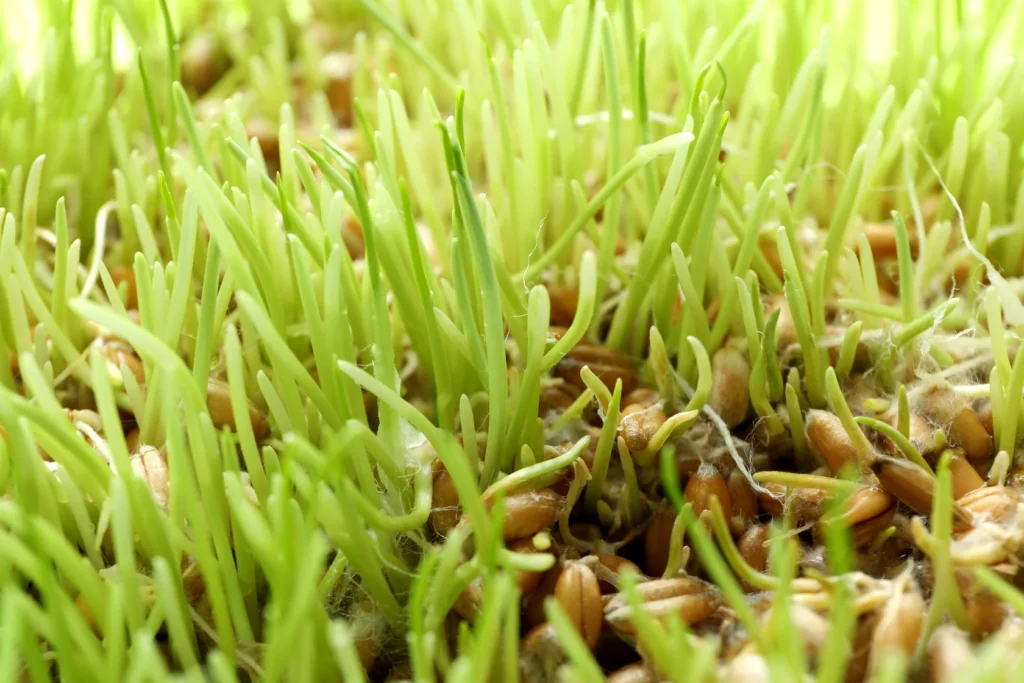
Overseeding involves distributing new grass seed over an existing lawn. The goal is to introduce additional grass plants into thin areas and increase overall turf density.
P&G Landscaping describes its aeration and overseeding service as a way to address soil compaction while helping thin and bare areas develop new growth.
So, if your lawn is compacted, aeration may be the priority.
If your lawn is thin, overseeding may be the priority.
If it is both compacted and thin, aeration and overseeding together may be the better solution.
That distinction can save you money and prevent you from treating the wrong problem.
What Is Lawn Aeration?
Lawn aeration is a process designed to relieve soil compaction and improve conditions around the grass roots.
Over time, soil can become compacted from foot traffic, pets, mowing equipment, outdoor activities, rainfall, and normal use of the property. When soil becomes too dense, water and air have more difficulty moving through the root zone.
That creates a frustrating situation for homeowners.
You may fertilize.
You may water.
You may mow regularly.
Yet the lawn still struggles.
The problem may not be the amount of fertilizer you are using. It may be the physical condition of the soil.
How Core Aeration Works
Professional core aeration removes small plugs of soil from the lawn.
These openings create pathways into the soil, allowing air, water, and nutrients to move more effectively toward the roots.
The objective isn’t simply to make holes in your lawn. The objective is to create a better environment for the turf underneath the surface.
P&G Landscaping specifically uses core aeration as part of its approach to reducing compaction and improving access to water, nutrients, and oxygen.
For a lawn that has been under stress during the hot North Carolina summer, improving the root-zone environment can be an important part of fall lawn preparation.
What Is Overseeding?
Overseeding is the process of adding new grass seed to an existing lawn.
Unlike starting a lawn completely from scratch, overseeding works with the turf you already have.
This makes it particularly useful when the lawn is still established but has become thinner than you would like.
Maybe your lawn looked great in spring but struggled during summer.
Maybe certain areas receive heavy foot traffic.
Maybe sections beneath trees are becoming sparse.
Maybe disease, insects, drought stress, or general wear have left visible bare spots.
Overseeding can introduce new grass plants into those areas.
The goal is straightforward: increase the number of healthy grass plants growing across the lawn.
A thicker lawn can improve appearance, help fill thin areas, and create a more uniform surface.
P&G Landscaping notes that overseeding can help fill turf damaged by summer stress, disease, or insects while improving the density and appearance of thin lawns.
Why Aeration and Overseeding Are Often Done Together
This is where the comparison becomes especially important.
Aeration and overseeding are not competing services.
They can actually complement each other.
Aeration creates openings in the soil.
Overseeding introduces new seed.
When the two treatments are properly timed, aeration can create better opportunities for seed to reach the soil and establish.
Imagine spreading grass seed across a hard, compacted surface. Some seed may remain on top of the turf where it has limited contact with the soil.
Now imagine creating openings throughout that lawn before applying seed.
The seed has more opportunities to reach the soil.
That is one reason professional lawn aeration and overseeding are frequently paired together, particularly when a lawn has both compaction and low turf density.
However, combining services does not automatically make sense for every lawn.
A professional evaluation should consider the existing turf, soil condition, grass type, drainage, sunlight, lawn density, and seasonal timing.
When Should You Choose Aeration Instead of Overseeding?
Not every lawn needs new seed.
If your grass is relatively dense but the soil underneath has become compacted, aeration may be the more appropriate treatment.
Look for signs such as:
- Water sitting on the surface instead of soaking in
- Soil that feels unusually hard
- Heavy foot traffic areas
- Grass that struggles despite regular care
- Poor water penetration
- Weak or shallow-looking turf
- Areas that receive repeated mowing or equipment traffic
In these situations, the grass may already be present in sufficient numbers.
The bigger problem is that its roots are trying to grow in unfavorable soil conditions.
Aeration addresses that underlying issue.
It can also be a useful part of a broader lawn-care program that includes fertilization, weed control, mowing, and other maintenance services.
When Does Overseeding Make More Sense?
Overseeding becomes more attractive when the primary problem is thin turf rather than severe soil compaction.
Consider overseeding if you notice:
- Large areas of thin grass
- Bare patches
- Uneven turf density
- Grass weakened after summer heat
- Areas damaged by insects or disease
- Visible soil between grass plants
- A lawn that looks less full than it used to
You don’t necessarily need to replace the entire lawn.
If enough healthy turf remains, overseeding may provide a practical way to introduce additional grass without completely starting over.
This can be particularly appealing to homeowners who want a better-looking lawn without the cost and disruption associated with a complete lawn renovation.
When Your Lawn May Need Both
This is the situation many homeowners encounter after a demanding North Carolina summer.
The lawn is thinner.
The soil is compacted.
Some areas have bare spots.
Water does not seem to penetrate evenly.
The grass isn’t necessarily dead, but it doesn’t have the density or vigor it once had.
In that situation, aeration followed by overseeding can address two problems at once.
Aeration focuses on the soil environment.
Overseeding focuses on adding new turf.
The combination can help create better conditions for new seed while addressing compaction that may have been limiting existing grass.
Of course, results depend on several variables, including grass type, soil temperature, moisture, seed quality, sunlight, weather, and aftercare.
A professional lawn-care company should explain those factors rather than promising an instant transformation.
7 Signs Your Lawn May Need Aeration and Overseeding
Your lawn often tells you what is wrong if you know what to look for.
1. Your Grass Is Noticeably Thinner
If you can see more soil between individual grass plants, your lawn may benefit from additional turf density.
Overseeding can introduce new grass seed into thin areas.
2. Water Runs Off Instead of Soaking In
Persistent runoff can indicate compacted soil or drainage problems.
Aeration can improve pathways into the soil, although serious drainage issues may require additional solutions.
3. High-Traffic Areas Look Worse
Paths used frequently by children, pets, guests, or equipment often become compacted faster than the rest of the property.
Those areas may benefit from aeration.
4. Your Lawn Struggled During Summer
Heat and drought stress can leave turf thinner heading into fall.
If desirable grass remains but density has declined, overseeding may be worth considering.
5. You Have Bare Patches
Bare areas can result from several causes, including traffic, insects, disease, environmental stress, and poor growing conditions.
Simply throwing seed onto the problem may not solve it if the underlying cause remains.
6. Fertilizer Isn’t Producing the Results You Expect
If nutrients are available but the root zone is compacted, the grass may still struggle.
Aeration can improve the physical growing environment.
7. Your Lawn Looks Tired Even Though You Maintain It
Sometimes the problem isn’t neglect.
A lawn can receive regular mowing and still need renovation-oriented care.
That is when an evaluation can help determine what is actually holding it back.
What Professional Aeration and Overseeding Should Include
Hiring a professional should mean more than paying someone to run equipment over the lawn and scatter seed.
A quality service starts with evaluation.
The property should be considered as a complete system.
Depending on your lawn’s condition, the process may include:
- Assessing existing turf density
- Looking for compacted areas
- Evaluating thin and bare sections
- Considering grass type and seasonal conditions
- Preparing the lawn for treatment
- Performing core aeration
- Distributing appropriate grass seed
- Paying attention to areas requiring additional coverage
- Providing post-treatment watering recommendations
- Advising on mowing and traffic during establishment
- Identifying whether additional lawn-care services are appropriate
P&G Landscaping emphasizes lawn assessment, core aeration, proper coverage, property management, and post-service recommendations as part of its professional approach.
That attention to the details matters.
A lawn is not simply a square piece of grass.
Every property has different soil, sunlight, traffic, drainage, turf density, and maintenance history.
The P&G Landscaping Approach
P&G Landscaping is a family-owned lawn care and landscaping company serving residential properties throughout the Mooresville area and surrounding North Carolina communities. The company identifies quality workmanship, customer service, and residential lawn care as important parts of its business.
That residential focus matters because homeowners typically want more than a treatment.
They want someone to understand their property.
They want the work performed carefully.
They want communication when something needs attention.
And they want a lawn that looks better—not simply a box checked on a service schedule.
P&G Landscaping’s existing customer testimonials emphasize professionalism, reliability, responsiveness, attention to detail, and improvements in lawn appearance.
The company also provides additional lawn-care services, including fertilization and weed control, fungus control, insect and grub control, lawn maintenance, mowing, trimming, yard cleanup, and landscaping.
That broader capability can be valuable when aeration and overseeding are only part of the solution.
Fall Is an Important Window for North Carolina Lawns
For many North Carolina homeowners, fall is the time to stop thinking only about how the lawn looks today and start thinking about how it will perform in the coming seasons.
Summer can leave turf stressed by heat, humidity, drought conditions, traffic, insects, and disease.
Fall provides an opportunity to address weaknesses before they become larger problems.
This is particularly relevant for homeowners in the Lake Norman region, including Mooresville, Huntersville, Cornelius, Davidson, Troutman, and Sherrills Ford. P&G Landscaping specifically lists these communities among its service areas.
The right timing depends on the grass type and current lawn conditions, so there is no universal calendar date that works for every property.
That is why an evaluation is more useful than simply asking, “Is September the right month?”
The better question is:
Is my lawn ready for aeration, overseeding, or both?
What Happens After Aeration and Overseeding?
Post-treatment care is one of the most important parts of the process.
New grass seed needs moisture and appropriate growing conditions to germinate.
P&G Landscaping recommends shallow, frequent watering during the initial period after aeration and seeding, followed by less frequent but deeper watering as the seedlings develop. Its guidance also notes that fescue may take approximately 21 days to germinate and recommends avoiding mowing for roughly two weeks after aeration to give new grass time to establish.
The exact schedule should be adjusted according to weather, irrigation, soil conditions, grass type, and the specific recommendations for your lawn.
The biggest mistake is assuming the work is finished when the equipment leaves.
The treatment creates the opportunity.
Proper aftercare helps the new grass take advantage of it.
Common Mistakes Homeowners Make
Spreading Seed Without Addressing the Soil
If compacted soil is limiting your lawn, simply adding more seed may not address the underlying issue.
Watering Too Aggressively
Heavy watering can move newly distributed seed away from the areas where you want it to establish.
Mowing Too Soon
New seedlings need time to develop.
Cutting too early can interfere with establishment.
Treating Every Thin Lawn the Same
Thin grass can have many causes.
It may be compaction.
It may be poor soil.
It may be insects.
It may be disease.
It may be insufficient sunlight.
It may be moisture problems.
A good lawn-care plan starts with identifying the cause.
Expecting Overnight Results
Aeration is a soil-improvement process.
Overseeding requires germination and establishment.
The goal is a healthier, denser lawn over time—not an instant cosmetic change.
Is Professional Lawn Aeration Worth It?
For homeowners comfortable with landscaping equipment, DIY aeration is possible.
But equipment rental is only one part of the job.
You also need to consider:
- Proper timing
- Turf type
- Soil conditions
- Equipment coverage
- Irrigation
- Underground utilities
- Property obstacles
- Seed selection
- Post-treatment care
- Whether the lawn actually needs aeration
A professional service removes much of that guesswork.
It also saves homeowners from transporting heavy equipment, operating unfamiliar machinery, and spending an entire weekend trying to complete a job that requires proper coverage.
If you would rather spend your Saturday enjoying your property than operating a core aerator, professional service can be a practical investment.
What If Aeration and Overseeding Aren’t Enough?
This is an important question—and a responsible landscaping company should be willing to answer it.
Aeration and overseeding are not magic solutions.
If your lawn has severe drainage problems, extensive pest damage, major disease issues, poor soil, inadequate sunlight, or very little desirable turf remaining, another approach may be necessary.
That could involve:
- Fertilization
- Weed control
- Fungus control
- Insect or grub control
- Soil improvement
- Lawn renovation
- Irrigation adjustments
- Ongoing lawn maintenance
P&G Landscaping offers several complementary lawn-care services, including fertilization and weed control, fungus control, armyworm, grub and insect control, as well as ongoing lawn maintenance.
The goal should be to invest in the treatment your lawn actually needs—not to sell you a service simply because it is popular.
Aeration vs Overseeding: Which One Is Right for Your Lawn?
Here is the simplest way to think about the decision:
Choose aeration when soil compaction is the primary problem.
Choose overseeding when turf density is the primary problem.
Consider both when the lawn is compacted and thin.
But there is one more factor: why is the lawn struggling?
If insects caused the damage, seed alone will not solve the problem.
If fungus caused the thinning, overseeding without addressing the disease may produce disappointing results.
If the lawn lacks sufficient sunlight, adding more seed may not change the outcome.
If water is pooling because of a drainage problem, aeration may help in some circumstances but may not be the complete answer.
A professional evaluation can help you avoid spending money on the wrong treatment.
Get a Professional Lawn Assessment Before You Spend Money
If your lawn has lost density after summer, don’t guess at the solution.
Let a professional look at the property and determine whether lawn aeration, overseeding, or both make sense.
P&G Landscaping serves homeowners throughout Mooresville, Huntersville, Cornelius, Davidson, Troutman, Sherrills Ford, and the surrounding Lake Norman area.
Whether your goal is to improve a thin lawn, relieve soil compaction, prepare your turf for the next season, or simply understand why your grass isn’t performing as expected, an evaluation is a smart place to start.
Ready to find out what your lawn actually needs? Contact P&G Landscaping today for a professional estimate.
Call (704) 931-5700 or request a quote online.
A healthier lawn starts with addressing the problem beneath the surface—not simply treating what you can see.
Frequently Asked Questions About Aeration vs Overseeding
What is the main difference between aeration vs overseeding?
Aeration improves the soil environment by creating openings that can help air, water, and nutrients reach the root zone. Overseeding adds new grass seed to an existing lawn to increase turf density. They address different problems and can be used together when appropriate.
Does aeration vs overseeding mean I have to choose only one?
No. Aeration vs overseeding is not necessarily an either-or decision. If your lawn has compacted soil and thin turf, combining core aeration with overseeding can address both conditions.
Is lawn aeration necessary before overseeding?
Not always. However, aeration can be particularly helpful when soil compaction is present because it creates openings in the lawn and can improve seed-to-soil contact. Whether it is appropriate depends on the lawn’s condition.
Can overseeding fix a completely bare lawn?
Overseeding is generally intended for existing turf that has become thin or patchy. If very little desirable grass remains, a more extensive lawn renovation may be necessary.
When is the best time for aeration and overseeding in North Carolina?
Timing depends on the grass type, weather, soil temperature, and lawn condition. For homeowners in the Mooresville and Lake Norman region, fall can be an important period for evaluating and improving cool-season turf, but the ideal timing should be determined based on the specific property.
How long does it take for overseeded grass to grow?
Germination varies according to grass type, soil temperature, moisture, weather, seed quality, and growing conditions. Fescue, for example, can take around three weeks to germinate under appropriate conditions.
Should I fertilize after aeration and overseeding?
Fertilization can be beneficial when the lawn has nutritional needs, but the correct approach depends on the grass type, season, soil condition, and existing lawn-care program. Fertilization should be part of an overall strategy rather than automatically applied to every lawn.
How soon can I mow after overseeding?
Newly seeded areas should generally be given enough time to establish before mowing. P&G Landscaping recommends avoiding mowing for approximately two weeks after aeration and seeding, although actual timing can vary according to growth and lawn conditions.
Can aeration damage my lawn?
Core aeration temporarily creates visible openings and soil plugs in the lawn. That is an intentional part of the process. When performed correctly, these openings are designed to improve the growing environment rather than permanently damage the turf.
How much does lawn aeration and overseeding cost?
The price depends on lawn size, accessibility, turf condition, the amount of work required, and whether additional lawn-care services are recommended. A property-specific estimate is more accurate than relying on a generic online price.
Give Your Lawn a Better Chance This Fall
A thin lawn doesn’t always need to be replaced.
A struggling lawn doesn’t always need more fertilizer.
And adding grass seed isn’t always the first step.
The right solution begins with understanding the difference between aeration vs overseeding and identifying what your lawn is actually missing.
If the soil is compacted, aeration can help improve the environment around the roots.
If the turf is thin, overseeding can introduce new grass plants.
If both problems exist, combining the services can give your lawn a stronger starting point for new growth.
For homeowners throughout Mooresville, Huntersville, Cornelius, Davidson, Troutman, Sherrills Ford, and the Lake Norman area, P&G Landscaping can evaluate your lawn and help determine the right approach.
Don’t spend another season wondering why your lawn isn’t as thick and healthy as you want it to be.
Call P&G Landscaping at (704) 931-5700 or request your quote today.
Your lawn already has a foundation. The right care can help it become the lawn you want to see when you look out the window.