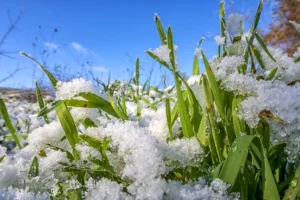







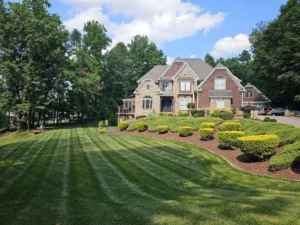


A healthy, green fescue lawn in spring often depends on the decisions you make before winter arrives. While many homeowners assume lawn care can wait until warmer weather returns, late fall is one of the most important opportunities to support established tall fescue lawns in North Carolina.
As temperatures cool, tall fescue enters a favorable growing period. Unlike warm-season grasses that typically become dormant as temperatures drop, tall fescue is a cool-season grass that can continue growing during suitable fall and winter conditions. Its seasonal growth pattern makes properly timed fertilization an important part of a year-round lawn maintenance strategy.
Understanding the late fall fertilization benefits for fescue lawns in NC can help homeowners make informed decisions about nutrient management, winter preparation, and spring lawn performance.
A properly planned late-fall fertilizer application can support healthy growth, improve lawn color, and help established turf recover from the demands of summer. However, results depend on application timing, soil conditions, the fertilizer used, and how much nitrogen the lawn has already received.
Applying fertilizer without considering these factors can waste money and potentially contribute to nutrient runoff or excessive growth.
This guide explains why late-fall fertilization matters, when to schedule it, what benefits to expect, and how professional lawn fertilization can help North Carolina homeowners maintain a more attractive lawn.
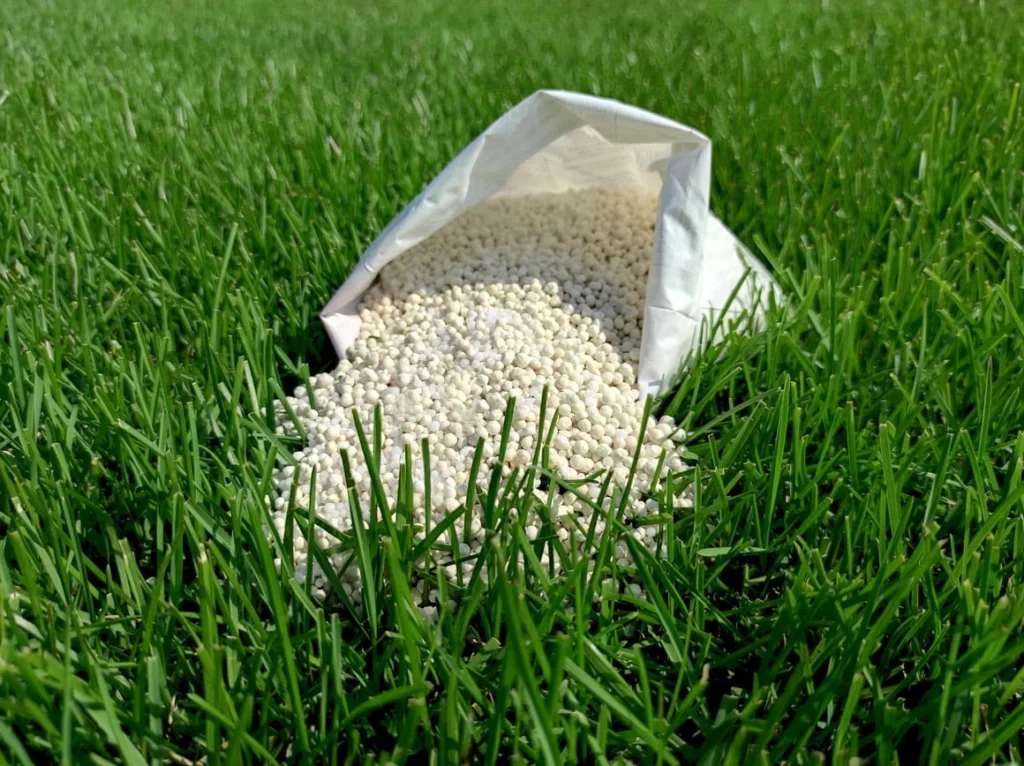
Want to prepare your fescue lawn for the coming season? Request a lawn fertilization quote and find out which late-fall treatments are appropriate for your property.
Why Late Fall Is an Important Time to Fertilize Fescue in North Carolina
Tall fescue behaves differently from bermudagrass, centipedegrass, and other warm-season turfgrasses. Its strongest growth periods generally occur during cooler weather, particularly in fall and spring.
North Carolina homeowners can take advantage of this growth pattern by scheduling fertilization according to the lawn’s seasonal needs.
NC State Extension recommends soil testing and describes a fall fertilization program that includes a November application for established tall fescue lawns. The recommended timing is when the grass remains green but is no longer growing as actively. Specific rates should be based on soil-test results and the lawn’s existing nutrient program.
Cool weather creates favorable growing conditions
During the hottest part of summer, tall fescue may struggle with heat and drought stress. Growth can slow, and some lawns develop brown patches, thinning, or uneven color.
As temperatures become more favorable in fall, established fescue can resume more active growth.
Properly timed fertilization supplies nutrients that support this growth when the lawn can use them.
Fall is an opportunity to address seasonal nutrient needs
A lawn may have used substantial nutrients during its growing season. Mowing, environmental conditions, and normal turf growth all influence nutrient demand.
Late fall offers another opportunity to evaluate whether the lawn needs additional nitrogen or other nutrients before winter.
However, more fertilizer is not automatically better. A soil test and a review of previous applications help determine what the lawn actually needs.
A better spring lawn starts with appropriate fall maintenance
Homeowners often wait until spring to think about lawn color and density.
By then, some important fall maintenance opportunities have already passed.
Properly timed late-fall fertilization can help established fescue maintain its condition and support growth during favorable periods. It is one component of a broader lawn maintenance strategy that also includes mowing, appropriate watering, weed management, and soil care.
7 Late Fall Fertilization Benefits for Fescue Lawns in NC
Late-fall fertilization can offer several advantages when the lawn needs additional nutrients and the application is properly timed.
The benefits are not identical for every property. Soil fertility, turf density, weather, and previous maintenance all influence the outcome.
1. Supports healthy root and shoot growth
Nitrogen is an essential plant nutrient involved in chlorophyll production, leaf growth, and overall turf development.
When nitrogen is applied at an appropriate rate during a suitable growing period, it can help established fescue maintain healthy growth.
A lawn with an adequate nutrient supply is better positioned to continue normal development as conditions permit.
Fertilizer does not guarantee deeper roots, however. Root development also depends on soil structure, moisture, oxygen availability, and the overall condition of the turf.
For homeowners, the practical benefit is a lawn that receives the nutrients it needs instead of being left deficient or receiving unnecessary applications.
2. Helps maintain a greener lawn through cooler weather
Nitrogen supports chlorophyll production, which contributes to the green color associated with healthy turf.
When a fescue lawn is deficient in nitrogen, it may appear pale or yellow-green. Correcting a nutrient deficiency can improve color as the grass uses the available nutrients.
Late-fall fertilization can therefore be useful for lawns that need additional nitrogen.
However, yellowing does not always indicate a fertilizer deficiency. Soil pH problems, waterlogged soil, disease, insects, and other conditions can create similar symptoms.
A proper evaluation helps avoid treating the wrong problem.
3. Supports recovery from summer stress
North Carolina summers can be difficult for tall fescue, especially in sunny areas with compacted soil or insufficient moisture.
After prolonged heat, a lawn may have thin areas, uneven growth, or reduced vigor.
Fall provides a more favorable environment for recovery as temperatures cool.
When nutrient deficiencies are part of the problem, appropriately timed fertilization can support renewed growth.
Fertilizer alone cannot repair every damaged area. Severe thinning, bare soil, disease, or insect damage may require additional work such as aeration, overseeding, or targeted treatment.
The best results come from identifying what caused the lawn to deteriorate in the first place.
4. Helps prepare established turf for winter
Winter preparation is not about forcing the lawn to grow as much as possible.
It is about maintaining the turf’s condition while temperatures and growth rates change.
An appropriate late-fall fertilizer application can supply nutrients needed by established fescue as it approaches colder weather.
The timing matters. Applying excessive nitrogen too late, particularly when grass is no longer actively growing, can create unnecessary nutrient losses and may not deliver the expected benefit.
A lawn-care professional can assess whether another application is appropriate based on the lawn’s condition, location, and previous fertilization.
5. Complements a complete fall lawn-care program
Fertilization works best as part of a coordinated maintenance plan.
A fescue lawn may also need mowing adjustments, aeration, overseeding, weed control, or improved watering practices.
For example, compacted soil can restrict the movement of water and air through the root zone. Adding fertilizer without addressing severe compaction may not solve the underlying problem.
Similarly, thin areas may need overseeding rather than additional nitrogen alone.
A well-planned fall lawn-care program addresses the conditions that affect turf health rather than relying on one treatment.
6. Helps support a more uniform lawn appearance
Uneven color and inconsistent growth can make an otherwise attractive property look neglected.
When nutrient deficiencies contribute to these problems, appropriate fertilization can help the grass grow more uniformly.
The result may be a more consistent appearance across the lawn.
Keep in mind that differences in sunlight, drainage, soil composition, and irrigation can still cause variation between areas. Those conditions may need separate attention.
7. Helps establish a more predictable maintenance routine
Late-fall fertilization is also valuable because it encourages homeowners to think about lawn care as a seasonal process rather than a series of last-minute fixes.
A planned maintenance schedule makes it easier to track fertilizer applications, identify recurring problems, and prepare for spring.
It can also help prevent overlapping treatments or unnecessary fertilizer use.
For busy homeowners, professional lawn maintenance provides a practical way to coordinate these tasks without having to manage every application independently.
Ready to prepare your lawn for winter? Request a professional lawn fertilization estimate and get recommendations based on your property’s needs.
When Should You Apply Late-Fall Fertilizer to Fescue in NC?
Timing is one of the most important factors in a successful fertilization program.
For many established tall fescue lawns in North Carolina, November is a common time for the final fall nitrogen application. NC State Extension’s tall fescue calendar identifies mid-September and November as typical application periods when following its general guidance for a lawn without a soil-test-based program.
The appropriate timing for an individual lawn depends on local weather, grass growth, soil conditions, and previous applications.
Watch the grass, not just the calendar
A date alone does not determine whether a fertilizer application is appropriate.
Consider whether the lawn is still green, whether growth has slowed, and whether the grass is experiencing drought or other stress.
The goal is to apply nutrients when the lawn can use them while avoiding unnecessary applications.
Consider your location in North Carolina
Weather conditions vary across the state.
Homeowners in the Piedmont, including the greater Charlotte and Lake Norman areas, may experience different soil and temperature conditions from homeowners in the mountains or coastal plain.
These differences can affect the timing and effectiveness of a late-fall application.
Local recommendations and the lawn’s actual condition should guide the schedule.
Avoid fertilizing without checking the lawn’s needs
If fertilizer has already been applied several times during fall, another application may not be necessary.
A soil test can help identify nutrient requirements and soil pH issues. NC State Extension recommends soil testing to determine the lawn’s nutrient needs rather than relying exclusively on a generic fertilizer formula.
What Type of Fertilizer Is Best for Tall Fescue in Late Fall?
There is no single fertilizer product that is best for every North Carolina lawn.
The appropriate product depends on the nutrients already present in the soil, the grass’s needs, and the lawn’s recent fertilization history.
Nitrogen supports color and growth
Nitrogen is the primary nutrient associated with green color and leaf growth.
The correct application rate depends on the product’s nitrogen concentration and the amount recommended for the lawn.
Applying more nitrogen than necessary does not guarantee better results. Excessive applications can increase the risk of nutrient loss and unwanted growth.
Phosphorus and potassium should match actual needs
Phosphorus supports important plant functions, while potassium contributes to several processes involved in plant health and stress response.
Established lawns do not automatically need additional phosphorus with every fertilizer application.
A soil test can help determine whether phosphorus, potassium, lime, or other amendments are needed.
Slow-release formulations may be appropriate
Some lawn fertilizers contain slow-release nitrogen that becomes available over time.
The appropriate formulation depends on application timing, soil conditions, weather, and the product label.
A professional can help select a product and rate that fit the lawn’s requirements.
What Does a Professional Late-Fall Lawn Fertilization Service Include?
A professional fertilization service should begin with evaluating the lawn rather than simply spreading fertilizer across the property.
Depending on the provider and service plan, the process may include the following steps.
Lawn condition assessment
The lawn is evaluated for grass type, density, visible nutrient deficiencies, discoloration, thin areas, and other issues that may influence treatment decisions.
Review of fertilization history
Previous applications matter.
Knowing what was applied and when helps determine whether another treatment is necessary and reduces the risk of excessive nitrogen.
Soil testing recommendations
When nutrient needs or soil pH are uncertain, a soil test can provide useful guidance.
The results help determine which nutrients are required and whether the lawn needs lime or another soil amendment.
Fertilizer selection and application
The fertilizer product, rate, and timing should be appropriate for the lawn.
Uniform application helps reduce missed areas and excessive concentrations.
Post-application guidance
Homeowners should receive clear instructions about watering, lawn use, and any other precautions required by the product label.
Recommendations for additional lawn care
If the lawn has compacted soil, bare areas, weeds, or signs of disease, the provider can explain whether additional services may be appropriate.
This makes fertilization part of a broader maintenance strategy rather than an isolated treatment.
Signs Your Fescue Lawn May Need Late-Fall Fertilization
Not every lawn needs another fertilizer application in November.
However, certain conditions may indicate that the lawn needs a closer evaluation.
Pale or uneven green color
Nitrogen deficiency can contribute to pale grass, although other problems can produce similar symptoms.
A professional assessment can help determine whether fertilizer is the appropriate solution.
Slow recovery after summer
If the lawn has struggled through summer heat and now shows weak growth, it may benefit from a fall maintenance review.
Nutrient availability is one factor to consider, alongside moisture, soil compaction, and disease.
Thin turf or bare patches
Thin areas do not automatically mean the lawn needs more fertilizer.
Depending on the cause, the appropriate solution may involve aeration, overseeding, improved irrigation, or treatment for disease or insects.
A history of inconsistent lawn care
If fertilizer applications have been skipped or poorly timed, the lawn may benefit from a structured program.
A soil test and review of previous treatments can help establish a sensible plan.
You are unsure what was applied earlier in the year
Applying additional fertilizer without knowing the previous rate can lead to unnecessary nutrient use.
If you have no record of past applications, consider having the lawn assessed before proceeding.
Late-Fall Fertilization Mistakes to Avoid
The right fertilizer applied incorrectly can still create problems.
Avoid these common mistakes when preparing a fescue lawn for winter.
Applying too much nitrogen
More fertilizer does not automatically mean a healthier lawn.
Excess nitrogen can contribute to nutrient loss and may encourage growth that is not appropriate for the current conditions.
Follow soil-test recommendations and product-label directions.
Fertilizing at the wrong time
Late-fall fertilization should be planned around the lawn’s growth pattern and local conditions.
An application made too late may not provide the intended benefits.
Ignoring soil pH
Grass can struggle to use nutrients effectively when soil conditions are unsuitable.
Soil testing can identify pH problems and help determine whether lime is needed.
Treating every grass type the same way
Tall fescue is a cool-season grass. Bermudagrass, centipedegrass, and zoysiagrass are warm-season grasses with different fertilization schedules.
Do not apply a tall fescue schedule automatically to a warm-season lawn.
Assuming fertilizer fixes every problem
Fertilizer cannot correct all causes of thinning, discoloration, weeds, or bare patches.
Correct diagnosis is essential before selecting a treatment.
How Late-Fall Fertilization Works With Aeration and Overseeding
Many homeowners schedule multiple lawn-care services during fall because this season offers favorable conditions for tall fescue maintenance.
Aeration, overseeding, and fertilization can complement one another, but their timing should be coordinated.
Aeration addresses compacted soil
Core aeration removes small plugs of soil to help relieve compaction and improve the movement of air and water through the soil profile.
This can be beneficial for lawns that receive heavy foot traffic or grow in compacted soils.
Overseeding helps improve thin areas
Overseeding introduces new grass seed into an existing lawn.
For tall fescue, fall is generally the preferred season for establishing new grass because of its favorable growing conditions. NC State Extension emphasizes fall seeding and notes that late seeding can become less successful as temperatures decline.
Fertilization supports nutrient management
Fertilization supplies nutrients when the lawn needs them.
However, fertilizer selection and timing should account for new seedlings, prior applications, and any herbicides being used.
Some herbicides can affect new grass establishment. Always follow product-label directions and coordinate treatments appropriately.
How to Choose a Lawn Fertilization Service in North Carolina
A good lawn-care provider should be able to explain the purpose of a treatment, why it is being recommended, and how it fits into your lawn’s overall maintenance plan.
Before hiring a provider, consider the following.
Ask how fertilizer rates are determined
Look for a provider who considers lawn conditions, previous applications, and soil-test recommendations rather than applying the same amount to every property.
Confirm what the service includes
Ask whether the service includes an assessment, fertilizer application, application records, and post-treatment instructions.
Discuss your grass type
Make sure the provider understands the difference between tall fescue and warm-season grasses.
Ask about additional lawn-care needs
If your lawn also needs aeration, overseeding, weed control, or disease management, ask how those services should be coordinated.
Confirm local availability
Homeowners in Mooresville, Huntersville, Cornelius, Davidson, Troutman, Sherrills Ford, and surrounding North Carolina communities should confirm that a provider serves their specific address.
Compare the value of the service, not just the price
The lowest quote may not include the same assessment, product, application rate, or follow-up guidance as another service.
A clear estimate helps you understand what you are paying for.
Is Late-Fall Fertilization Worth the Investment?
For homeowners with established tall fescue lawns, properly timed late-fall fertilization can be a valuable part of a seasonal maintenance program.
The potential benefits include supporting healthy growth, correcting nutrient deficiencies, and helping maintain lawn condition as the seasons change.
The value depends on whether the lawn actually needs the treatment.
If your lawn already has adequate nutrients, another application may be unnecessary. If the lawn has a soil pH problem, disease, or severe compaction, fertilizer alone may not resolve the issue.
The best investment is a treatment plan based on the lawn’s condition rather than assumptions.
Professional lawn fertilization can also save time and help homeowners avoid common application mistakes.
Request a quote for late-fall lawn fertilization and find out whether your fescue lawn would benefit from a professionally planned treatment.
Frequently Asked Questions About Late-Fall Fescue Fertilization in NC
What are the main late fall fertilization benefits for fescue lawns in NC?
The main potential benefits include supplying needed nitrogen, supporting appropriate growth, helping maintain green color, and complementing a broader fall lawn-care program. Results depend on soil fertility, timing, weather, and the lawn’s condition.
When should I apply late-fall fertilizer to fescue in North Carolina?
November is a common time for a final fall nitrogen application to established tall fescue lawns in North Carolina. However, the appropriate timing depends on local weather, grass growth, soil conditions, and previous fertilizer applications.
Is November too late to fertilize tall fescue?
Not necessarily. November is included in NC State Extension’s general tall fescue fertilization calendar. The application should be timed appropriately for local conditions, and homeowners should avoid unnecessary fertilizer applications when the lawn no longer needs nutrients.
Does late-fall fertilization make fescue greener in spring?
Adequate nitrogen can support turf color and growth, but the results depend on the lawn’s existing nutrient levels and overall condition. Fertilizer cannot guarantee a particular spring color or fix problems unrelated to nutrient deficiency.
How much fertilizer does a fescue lawn need in late fall?
The correct amount depends on the soil-test results, fertilizer analysis, lawn size, and previous applications. NC State Extension provides general guidance for established tall fescue, but a soil test is the better way to determine individual nutrient needs.
Should I fertilize my fescue lawn after overseeding?
Fertilization may be part of an overseeding program, but product selection and timing should account for seedling establishment and any other treatments. Follow soil-test recommendations and product-label instructions.
Can I apply weed control and fertilizer at the same time?
Some products combine fertilizer and weed control, but they are not appropriate for every lawn or situation. Certain herbicides can affect newly seeded grass. Check the product label and coordinate applications with the lawn’s condition and maintenance schedule.
Does late-fall fertilization work for bermudagrass and centipedegrass?
Tall fescue and warm-season grasses have different nutrient requirements and seasonal growth patterns. Late-fall nitrogen applications recommended for fescue should not automatically be used on bermudagrass or centipedegrass. Follow grass-specific guidance.
How do I know if my lawn needs fertilizer or another treatment?
A lawn assessment can help identify whether discoloration or thinning is related to nutrient deficiency, soil pH, compaction, disease, insects, irrigation, or another factor. Soil testing is particularly useful for determining nutrient requirements.
Where can I find late-fall lawn fertilization in North Carolina?
Look for a local lawn-care provider that serves your community and has experience maintaining tall fescue. Homeowners in Mooresville, Huntersville, Cornelius, Davidson, Troutman, Sherrills Ford, and nearby areas should confirm service availability and ask for a property-specific quote.
Prepare Your Fescue Lawn for a Stronger Start Next Spring
Late fall is an important opportunity to evaluate your lawn’s condition before winter.
For North Carolina homeowners with established tall fescue, properly timed fertilization can help supply nutrients when they are needed and complement other seasonal maintenance services.
But a successful treatment begins with understanding the lawn.
Soil fertility, grass type, application timing, summer damage, and previous maintenance all influence what should happen next.
Instead of applying fertilizer simply because it is November, take the time to determine whether your lawn needs additional nutrients and which treatment makes sense.
A well-planned lawn-care program can help you avoid unnecessary applications, maintain a more consistent appearance, and prepare your property for the next growing season.
Request a late-fall lawn fertilization quote from a local North Carolina lawn-care professional. Ask about soil testing, appropriate fertilizer rates, and any additional services your fescue lawn may need before winter.
A healthier lawn starts with the right treatment at the right time.