


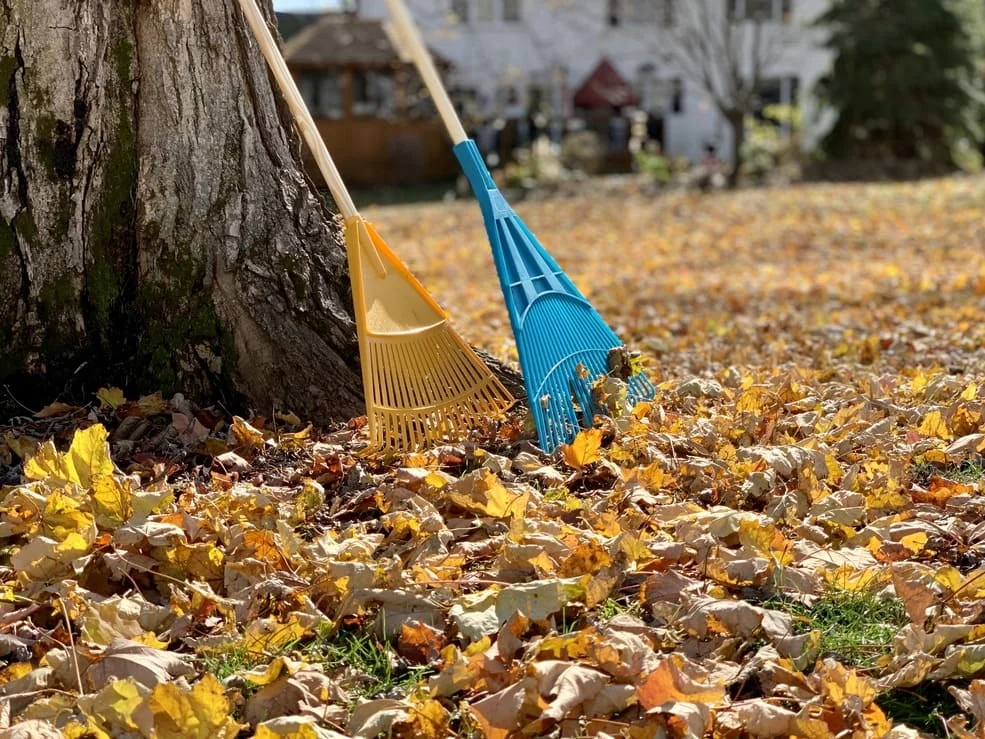






Fall is one of the most beautiful times of year in North Carolina.
Trees change color. Temperatures become more comfortable. The landscape takes on a completely different appearance.
But there is a downside for homeowners: leaves eventually have to come down.
A few leaves scattered across your lawn are usually not a major concern. The problem starts when they accumulate and remain on the grass for days or weeks.
A thick layer of leaves can block sunlight, trap moisture, restrict airflow, create favorable conditions for fungal problems, and leave the lawn looking neglected. If the leaves remain through wet weather, the situation can become even more problematic.
That is why leaf removal services are more than an aesthetic upgrade.
Timely fall cleanup is part of protecting the condition and appearance of your lawn.
For homeowners in North Carolina, where fall weather can bring a combination of rain, humidity, temperature changes, and continued turf activity, keeping leaves under control can make a noticeable difference.
The good news is that you do not have to spend every weekend raking, blowing, bagging, and hauling leaves.
A professional leaf cleanup service can handle the work efficiently while helping you keep your property ready for the next season.
Need help with fall cleanup? Request a quote from a local lawn-care professional before accumulated leaves become a bigger problem.
Why Fallen Leaves Can Become a Lawn Problem
Leaves are natural.
That does not mean they should remain on your lawn indefinitely.
A thin layer of leaves may not cause immediate damage, particularly if it is removed or broken down quickly. But as more leaves accumulate, they begin forming a dense layer over the turf.
That layer changes the environment immediately above the grass.
Sunlight becomes limited.
Air movement decreases.
Moisture can remain trapped against the turf.
The grass underneath may struggle to receive the conditions it needs to remain healthy.
The longer the leaves stay in place, the greater the potential for problems.
This is why timing matters.
The goal of fall cleanup is not necessarily to remove every single leaf the moment it lands.
It is to prevent the lawn from becoming covered by a thick, persistent layer of organic debris.
How Leaf Removal Services Protect Your Grass
Professional leaf removal addresses a problem that is easy to underestimate.
The lawn may look fine underneath the leaves when you first see them.
But what happens beneath that layer matters.
Leaves can block sunlight
Grass needs sunlight to maintain healthy growth.
When a thick layer of leaves covers the turf, less light reaches the grass blades.
This can be particularly important for cool-season lawns that remain active during fall.
Tall fescue, for example, commonly enters an important growth period as temperatures become cooler.
Allowing the lawn to remain covered by leaves during this period can interfere with the conditions needed for healthy turf development.
Leaves can trap moisture
Wet leaves can create a damp layer directly against the grass.
North Carolina’s fall weather can include periods of rain and high humidity, making this particularly relevant.
When leaves remain wet and compacted, the lawn underneath receives less air circulation and stays damp for longer.
Leaves can create favorable conditions for lawn disease
A combination of moisture, limited airflow, and organic material can create conditions favorable to certain turf diseases.
Leaf removal does not guarantee that disease will never occur.
However, maintaining a cleaner turf surface removes one factor that can contribute to poor lawn conditions.
Leaves can smother sections of grass
When leaves become thick enough, they can physically cover the grass.
The result may be areas of weakened, yellowing, or thinning turf after the leaves are finally removed.
This is particularly frustrating for homeowners who have invested time and money into fertilization, aeration, overseeding, and other lawn-care services.
When Should You Remove Leaves From Your Lawn?
There is no single day on the calendar when every North Carolina property needs leaf cleanup.
The right timing depends on how quickly leaves are accumulating.
A good rule is to avoid allowing leaves to build into a thick, continuous layer over the lawn.
For many properties, this means scheduling cleanup periodically throughout the fall rather than waiting until every tree has completely lost its leaves.
Early fall
Early fall may involve relatively light cleanup.
Depending on the property, a homeowner may be able to handle small amounts of leaves with routine mowing or blowing.
Peak leaf drop
This is when professional leaf removal can become especially valuable.
Trees may drop large quantities of leaves in a short period.
Instead of trying to remove everything in one massive cleanup, periodic service can keep the accumulation manageable.
Late fall
Once most leaves have fallen, a final comprehensive cleanup can prepare the property for winter.
This may include lawns, landscape beds, walkways, driveways, and other areas where leaves have accumulated.
The key is simple: don’t wait until the lawn disappears underneath the leaves.
Why Waiting Until Spring Can Cost You More
One of the most common leaf-cleanup mistakes is simply ignoring the leaves.
The assumption is understandable:
“They will eventually decompose.”
Some organic material will break down naturally.
But allowing a heavy layer of leaves to remain on the lawn throughout winter is different from having a light layer of leaves naturally incorporated into the landscape.
Compacted leaves can become wet, dense, and difficult to remove.
By spring, you may discover areas of thin or damaged grass that require additional attention.
That can mean:
- Additional cleanup
- Lawn repair
- Overseeding
- Fertilization
- Weed control
- More time spent restoring the property
Removing leaves before they become a persistent problem can be considerably easier than dealing with the consequences later.
Fall Leaf Cleanup Is About More Than Raking
Many homeowners think of leaf removal as a simple matter of grabbing a rake.
That works for a small yard with a few trees.
It becomes much less appealing when the property has mature trees, multiple landscape beds, slopes, large lawn areas, and extensive hardscaping.
Professional fall cleanup can involve several different tasks.
Leaf blowing
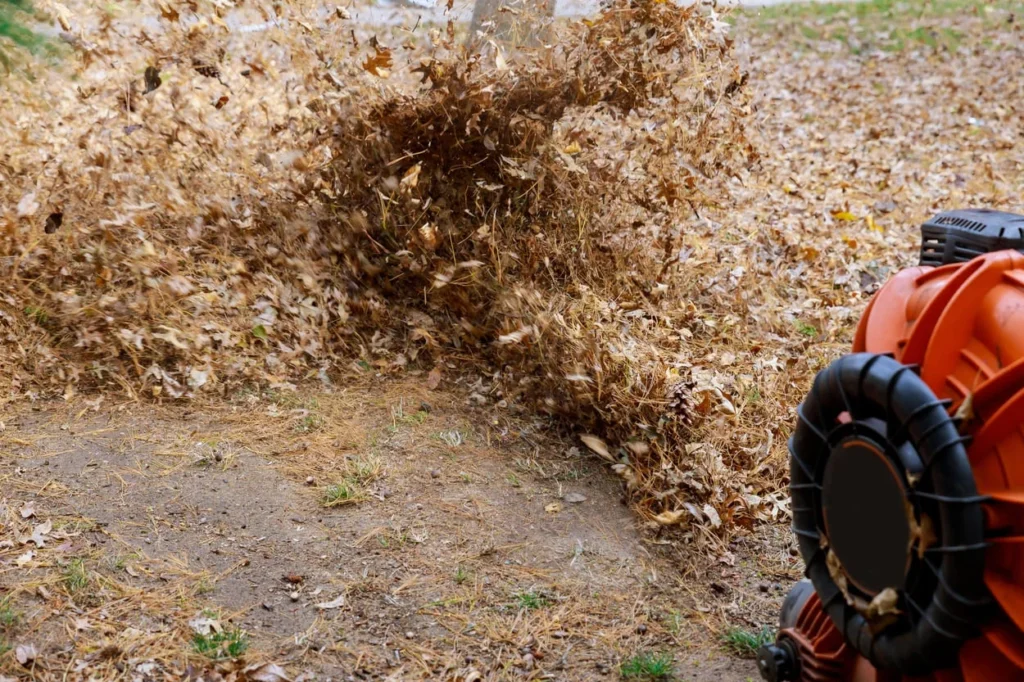
Leaf blowers can move leaves from large lawn areas and hard-to-reach spaces efficiently.
Raking
Some areas still require manual raking, particularly around landscape beds and sensitive areas.
Collection
Leaves need to be gathered rather than simply moved from one part of the property to another.
Hauling
Large quantities of leaves can create a disposal problem for homeowners.
Final cleanup
Driveways, sidewalks, patios, entrances, and other visible areas should be cleared so the property looks finished.
This is where professional service can save substantial time.
What Does a Professional Leaf Removal Service Include?
The exact scope depends on the property and service provider, but a comprehensive leaf cleanup may include several components.
Lawn cleanup
Leaves are removed from the main turf areas.
Landscape bed cleanup
Leaves often collect heavily around shrubs, trees, ornamental plants, and garden beds.
These areas require careful cleanup without damaging the surrounding landscape.
Hardscape cleanup
Walkways, patios, driveways, and other hard surfaces should be cleared of leaves and debris.
Blowing and raking
Different areas of the property may require different removal techniques.
Leaf collection
Leaves are gathered into manageable piles or containers.
Disposal or hauling
Depending on the service agreement and local requirements, collected leaves may be hauled away or handled according to the property’s needs.
A professional service should make it clear exactly what is included before work begins.
Signs Your Property Needs Professional Leaf Removal
You may not need a professional service every time a few leaves fall.
But certain signs indicate that cleanup has become a job worth outsourcing.
The lawn is mostly covered by leaves
If you can barely see the grass underneath the leaves, it is time to address the accumulation.
Leaves are becoming wet and compacted
Wet leaves are heavier and harder to remove.
They also tend to stick together and form dense layers.
You have mature trees
Properties surrounded by mature trees can generate a tremendous volume of leaves during fall.
Your property is large
A large lawn can turn a simple cleanup into an all-day project.
You do not have the equipment
A rake may be enough for a small property.
Larger properties often benefit from commercial blowers, collection equipment, and hauling capabilities.
You are simply out of time
This is perhaps the most practical reason.
Fall is already busy.
Work, holidays, family commitments, travel, and home projects can quickly fill the calendar.
There is no reason to spend every Saturday dealing with leaves if professional help is available.
The Benefits of Professional Leaf Removal Services
Professional leaf removal provides benefits that go beyond having a cleaner yard.
1. Protect your lawn
Removing excessive leaf accumulation helps maintain better growing conditions for the turf.
2. Improve curb appeal
A clean lawn immediately makes the entire property look more maintained.
3. Save time
A professional crew can complete in a fraction of the time what might take a homeowner an entire weekend.
4. Reduce physical effort
Raking, lifting, bagging, and hauling leaves can be physically demanding.
5. Prepare the lawn for winter
A clean lawn enters the colder months without a thick layer of accumulated debris covering the turf.
6. Make spring cleanup easier
Removing leaves in fall means there is less accumulated material waiting for you when spring arrives.
7. Protect your landscaping
Leaf buildup can also affect landscape beds, drainage areas, walkways, and other parts of the property.
Professional cleanup addresses the property as a whole rather than focusing exclusively on the lawn.
Why North Carolina Homeowners Should Pay Attention to Fall Cleanup
North Carolina has a diverse landscape, and the amount of leaf debris can vary dramatically from one property to another.
A home surrounded by mature hardwood trees may have substantially more cleanup needs than a property with only a few ornamental trees.
The state’s seasonal weather also matters.
Fall can bring comfortable temperatures and active turf growth, but it can also bring rain and moisture.
That combination makes timing important.
For homeowners in areas such as Mooresville, Huntersville, Cornelius, Davidson, Troutman, Sherrills Ford, and surrounding communities, seasonal leaf cleanup can be an important part of maintaining residential properties.
Local conditions can vary even between neighboring communities.
That is why a local lawn-care professional can evaluate the actual property rather than applying a generic national cleanup schedule.
Leaf Removal and Lawn Health Go Hand in Hand
A healthy lawn is rarely the result of one service.
Mowing, fertilization, weed control, aeration, overseeding, irrigation, and seasonal cleanup all address different aspects of turf management.
Leaf removal fits into that system.
For example, consider a homeowner who invests in fall aeration and overseeding.
The objective is to establish new grass and improve the lawn’s density.
Allowing a thick layer of leaves to remain on top of that lawn can work against those efforts.
Likewise, a lawn that has received fertilization still needs proper maintenance.
Leaf cleanup does not replace fertilization or other lawn-care services.
It supports the overall maintenance program.
What Happens During a Professional Leaf Cleanup?
A well-organized cleanup process should be efficient and predictable.
Step 1: Property assessment
The crew identifies the primary areas of leaf accumulation.
This includes lawn areas, landscape beds, hardscapes, corners, drainage areas, and spaces around structures.
Step 2: Leaf removal
Leaves are blown, raked, or collected depending on the surface and conditions.
Step 3: Consolidation
Collected leaves are gathered into manageable piles or collection areas.
Step 4: Removal and disposal
Leaves are handled according to the agreed service arrangement.
Step 5: Detail cleanup
Walkways, driveways, patios, entrances, and visible areas are cleaned.
Step 6: Final inspection
The property is checked for remaining piles and areas that need additional attention.
The result should not simply be “fewer leaves.”
The goal is a property that looks intentionally cleaned and ready for the next season.
Why DIY Leaf Cleanup Is Not Always the Cheapest Option
Doing the work yourself may seem like the obvious way to save money.
For a small property, it can be.
But homeowners should consider the actual cost of the project.
Think about:
- Hours spent raking
- Bags or collection containers
- Disposal fees
- Fuel
- Equipment
- Blower maintenance
- Physical effort
- Multiple cleanup sessions
- Time away from family or other activities
There is also the issue of volume.
A property with several mature trees can produce far more leaves than most homeowners expect.
What begins as “I’ll take care of it Saturday morning” can turn into several weekends of cleanup.
Professional service makes sense when the time, equipment, and disposal requirements outweigh the convenience of doing it yourself.
How Often Should You Schedule Leaf Removal?
The answer depends on the number of trees, property size, weather, and how quickly leaves accumulate.
Some properties may need only one comprehensive cleanup.
Others benefit from multiple visits.
Properties with few trees
A single late-season cleanup may be enough.
Properties with several mature trees
Periodic cleanup can prevent excessive accumulation.
Properties surrounded by trees
Multiple visits may provide the best balance between lawn protection and manageable cleanup.
Properties with recently overseeded lawns
Extra attention may be appropriate to prevent heavy leaf accumulation from covering newly establishing turf.
The important thing is to schedule service before the leaf layer becomes excessive.
Leaf Removal Services vs. Simply Mulching Leaves
Mulching leaves with a mower can be a useful lawn-maintenance practice under the right conditions.
Small quantities of leaves can sometimes be chopped into smaller pieces and incorporated into the turf.
But there is a limit.
If the leaf layer is too thick, simply mowing over it may not provide an adequate solution.
You may end up with:
- Excessive debris
- Visible clumps
- Poor turf coverage
- A messy appearance
- Too much organic material sitting on the lawn
Professional leaf cleanup is particularly valuable when the volume of leaves exceeds what can reasonably be handled through routine mowing.
The right approach depends on the amount and condition of the leaves.
What Makes a Good Leaf Removal Service?
Not every leaf cleanup service provides the same level of attention.
Before hiring someone, consider several factors.
Clear scope of work
Make sure you know whether the service includes lawns, beds, hardscapes, and leaf hauling.
Reliable scheduling
Fall weather changes quickly.
A professional provider should have a process for handling weather-related delays.
Proper equipment
Large properties may require commercial-grade blowers and collection equipment.
Attention to detail
Moving leaves into a pile is not the same as completing a property cleanup.
Local experience
A provider familiar with North Carolina properties is more likely to understand the seasonal demands of local lawns and landscapes.
Transparent pricing
Ask how the price is determined and whether hauling or disposal is included.
Communication
You should know when the crew will arrive, what they will do, and what happens if conditions change.
Common Objections to Professional Leaf Cleanup
“I can do it myself.”
You certainly can.
The question is whether your time is better spent elsewhere.
If your property has limited leaf accumulation, DIY cleanup may be practical.
If you have a large lawn surrounded by mature trees, professional service can save hours of work.
“I’ll just wait until spring.”
Waiting can allow leaves to become wet, compacted, and difficult to remove.
It may also leave the lawn covered during an extended period.
Fall cleanup is generally easier than dealing with months of accumulated debris later.
“It’s only leaves.”
Leaves are natural, but a heavy layer can still interfere with lawn conditions.
The issue is not whether leaves are natural.
The issue is how much material is covering the turf and how long it remains there.
“Professional cleanup costs too much.”
Compare the quote with the total time, equipment, disposal, and physical effort required to complete the project yourself.
For many homeowners, the convenience is a significant part of the value.
When Leaf Removal Becomes Part of a Bigger Lawn Problem
Sometimes leaves are not the only issue.
If you remove the leaves and discover:
- Thin grass
- Bare areas
- Yellow or brown patches
- Excessive weeds
- Moss
- Fungal symptoms
- Compacted soil
- Poor drainage
then the property may need additional lawn care.
Leaf removal is often the first step because it allows you to actually see the condition of the lawn.
Once the surface is clear, underlying problems become easier to identify.
Depending on the situation, the next step could include fertilization, weed control, aeration, overseeding, disease management, or other lawn-care services.
Why Fall Cleanup Can Improve Spring Lawn Preparation
One of the biggest advantages of removing leaves before winter is what happens later.
When spring arrives, you want your lawn ready for the new growing season.
You do not want to begin the season by dealing with months of accumulated leaves.
A clean property makes it easier to:
- Inspect the turf
- Identify thin areas
- Address weeds
- Evaluate drainage
- Plan fertilization
- Schedule aeration or overseeding when appropriate
- Begin regular mowing
In other words, fall cleanup can make the transition into spring lawn maintenance much easier.
Professional Leaf Removal for Busy Homeowners
For many homeowners, the biggest benefit is not the lawn itself.
It is the time saved.
Fall is already a busy season.
There are holiday preparations, school schedules, travel plans, home projects, and everyday responsibilities.
Adding several hours of leaf cleanup to the weekend may not be realistic.
A professional crew can handle the work while you focus on the things that actually require your attention.
That is the practical value of residential leaf removal.
You are not simply paying someone to move leaves.
You are paying for:
Time. Convenience. Consistency. A cleaner property.
If your lawn is already covered with leaves, request a local leaf removal estimate before the next round of fall weather makes cleanup more difficult.
Frequently Asked Questions About Leaf Removal Services
How often should I schedule leaf removal services?
The frequency depends on the number of trees, property size, weather, and how quickly leaves accumulate. Some properties need one major cleanup, while heavily wooded properties may benefit from multiple visits throughout the fall.
Can leaf removal services prevent lawn damage?
Timely leaf removal can help reduce problems associated with heavy leaf accumulation, such as blocked sunlight, trapped moisture, reduced airflow, and prolonged coverage of the turf.
It cannot guarantee that lawn damage will never occur, but it removes one common source of seasonal stress.
How long can leaves stay on my lawn?
A small amount of leaves may not create an immediate problem, but homeowners should avoid allowing a thick layer to remain on the turf for extended periods.
The more leaves accumulate and become wet and compacted, the more important timely cleanup becomes.
Is leaf removal necessary if I have a mower?
Not always.
Small amounts of leaves can sometimes be mulched with a mower.
However, large quantities of leaves may exceed what can reasonably be processed through mowing. In those situations, dedicated leaf removal is more practical.
When is the best time for leaf removal services?
The best timing depends on the property.
Rather than waiting for every leaf to fall, many homeowners benefit from periodic cleanup during peak leaf drop followed by a final cleanup after most leaves have fallen.
Can leaves damage grass over winter?
A thick, persistent layer of leaves can create unfavorable conditions for the turf by reducing light and airflow while trapping moisture.
Removing excessive accumulation before winter can help maintain a cleaner lawn surface.
Are leaf removal services worth it for a small yard?
It depends on the amount of leaf accumulation and your available time.
If your property has only a few trees, DIY cleanup may be relatively easy. If the yard accumulates leaves quickly or you do not have the time or equipment, professional service may provide valuable convenience.
Do leaf removal services include hauling the leaves away?
Not every provider handles disposal in the same way.
Before scheduling service, confirm whether leaf collection, hauling, and disposal are included in the quote.
Can leaf cleanup be combined with other lawn maintenance?
Yes.
Leaf cleanup can be coordinated with services such as mowing, lawn maintenance, fertilization, weed control, aeration, overseeding, shrub trimming, and other seasonal landscape services.
What areas can professional leaf removal services cover?
Residential leaf cleanup is available from local providers throughout many North Carolina communities, including areas around Charlotte and Lake Norman.
Homeowners should confirm that the provider services their specific city or neighborhood.
Don’t Let Fall Leaves Become a Spring Problem
Leaves are part of the beauty of fall.
They are also part of the maintenance that comes with owning a property surrounded by trees.
Leaving a few leaves on the lawn is not necessarily a problem.
Allowing a thick layer of wet, compacted leaves to remain for extended periods is a different situation.
Timely leaf removal services can help protect the appearance of your lawn, reduce excessive organic buildup, keep walkways and landscape areas clean, and make the transition into winter and spring maintenance easier.
More importantly, professional cleanup eliminates a job that can consume hours of your free time.
You do not need to wait until the lawn is completely buried before taking action.
Ready to clear the leaves?
If your property is accumulating leaves faster than you can manage them, now is the time to schedule professional fall cleanup.
Request a quote today for residential leaf removal and ask about recurring fall cleanup if your property has significant tree coverage.
You can also call a local lawn-care professional to discuss your property’s needs and determine whether one cleanup or multiple visits make sense.
A clean lawn heading into winter is easier to maintain, easier to inspect, and ready for the next season.