





A healthy lawn needs more than regular mowing and watering. When the soil beneath your grass becomes compacted, even the best lawn care routine can struggle to produce the results you want.
Grass roots need access to air, water, nutrients, and room to grow. Compacted soil limits all four.
That is where core aeration makes a difference.
A professional lawn aeration service removes small plugs of soil from your lawn, creating channels that allow air, water, and nutrients to move deeper into the root zone. The result is an environment where grass roots can grow stronger and your lawn can recover from the stress caused by foot traffic, heavy clay soil, mowing, weather, and normal seasonal use.
If you have been searching for a lawn aeration service near me because your grass looks thin, stressed, hard, or patchy, core aeration may be one of the most effective steps you can take to improve your lawn.
At P&G Landscaping, we help homeowners throughout North Carolina improve the health, appearance, and long-term performance of their lawns with professional lawn care services designed around local growing conditions.
Ready to give your lawn room to breathe and grow? Contact P&G Landscaping today to request an estimate for professional core aeration.
Why Soil Compaction Is a Problem for Your Lawn
Think about what happens to a lawn throughout the year.
People walk across it. Children play on it. Pets run over it. Lawn equipment repeatedly passes across the surface. Heavy rain can also contribute to compaction, particularly when soil is already dense or poorly drained.
Over time, the soil particles become pressed together.
When this happens, the spaces between soil particles become smaller. Those spaces are important because they allow oxygen, water, and nutrients to move through the soil.
When those pathways are restricted, grass roots have a harder time developing.
You may notice:
- Thin or weak grass
- Bare patches
- Water sitting on the lawn after rain
- Soil that feels hard under your feet
- Grass that becomes brown quickly during dry periods
- Slow recovery after mowing or heavy traffic
- Poor response to fertilization
- Increased thatch or surface debris
- Weak root development
- Uneven lawn growth
The frustrating part is that homeowners often respond by adding more fertilizer or watering more frequently.
But if compacted soil is the underlying problem, adding more products may not solve it.
Aeration addresses the soil itself.
How Core Aeration Improves Lawn Growth
Core aeration works by mechanically removing small plugs, or cores, of soil from the lawn.
Those openings create pathways into the soil profile.
That simple process can have a significant impact on the way your lawn receives the resources it needs to grow.
1. It Gives Grass Roots Better Access to Oxygen
Roots need oxygen for healthy development.
Compacted soil contains fewer open spaces for air to move through the root zone. By removing soil cores, aeration creates additional pathways for oxygen to reach the roots.
Better oxygen availability can support healthier root activity and improve the lawn’s ability to use available moisture and nutrients.
This is especially important for lawns growing in dense soils.
2. It Helps Water Reach the Root Zone
Water does not always penetrate compacted soil effectively.
Instead of moving downward, water can run across the surface or remain concentrated in certain areas.
Aeration creates openings that allow water to move deeper into the soil.
This means irrigation and rainfall can reach the root zone more effectively instead of simply sitting on top of the lawn.
For homeowners dealing with runoff or areas that dry out unevenly, this can make a noticeable difference.
3. It Improves Nutrient Availability
Fertilizer works best when the nutrients can reach the areas where grass roots can use them.
Compacted soil can interfere with that process.
After aeration, nutrients have improved pathways into the soil. This makes it easier for the root system to access available nutrients and supports more consistent lawn growth.
Aeration and fertilization can therefore work particularly well as complementary lawn care practices.
4. It Encourages Deeper Root Growth
A lawn with a stronger root system is generally better equipped to handle environmental stress.
When roots have room to expand, they can explore more of the soil profile for moisture and nutrients.
Core aeration helps create that space.
Over time, healthier root development can contribute to a lawn that is thicker, more resilient, and better able to recover from normal stress.
5. It Helps Your Lawn Recover From Compaction
The goal of aeration is not simply to make holes in the lawn.
The goal is to improve the growing environment beneath the grass.
Removing cores breaks through compacted areas and gives the soil an opportunity to open up.
As the lawn continues growing, those openings become part of a healthier soil structure.
Signs You Need a Lawn Aeration Service Near Me
Not every lawn needs aeration at the same frequency.
However, certain warning signs make the need much easier to identify.
If you are wondering whether it is time to search for a lawn aeration service near me, start by looking at how your lawn responds to everyday conditions.
Your Soil Feels Hard
Walk across your lawn after a normal period without rain.
If the soil feels unusually hard and dense, compaction may be limiting root development.
Water Runs Off Instead of Soaking In
If water quickly runs across the surface instead of penetrating the soil, compacted soil may be part of the problem.
This can also create areas of standing water.
Your Grass Looks Thin Despite Regular Care
If you mow correctly, water consistently, and fertilize when appropriate but your lawn still looks thin, the soil may be preventing the roots from fully benefiting from that care.
High-Traffic Areas Look Worse
Paths, entrances, play areas, and sections around driveways often experience more traffic.
These areas can become compacted faster than the rest of the lawn.
You Have Heavy or Clay Soil
Some North Carolina properties have soil conditions that make compaction more likely.
If your lawn grows in dense soil, regular aeration may be an important part of maintaining healthy turf.
Your Lawn Has Difficulty During Dry Weather
A shallow or restricted root system can make grass more vulnerable when moisture becomes limited.
Improving the soil environment can encourage deeper rooting and better water access.
Core Aeration vs. Simply Watering More
One of the most common lawn care mistakes is assuming that struggling grass simply needs more water.
Sometimes it does.
But more water does not necessarily solve compacted soil.
Imagine pouring water onto a tightly packed surface. If the water cannot move through the soil efficiently, increasing the amount of water may simply increase runoff or create wet areas.
Aeration addresses the physical condition of the soil.
Once the soil has better pathways, water can move more effectively toward the roots.
That is why professional aeration can be a valuable addition to a broader lawn maintenance program rather than a replacement for proper watering.
What a Professional Core Aeration Service Includes
Professional aeration should be more than simply running equipment over the lawn.
At P&G Landscaping, the objective is to improve the lawn’s growing environment while working carefully around the property.
Depending on the lawn and its condition, the service can include:
Lawn Assessment
Before aerating, the lawn should be evaluated for compaction, turf condition, drainage concerns, traffic patterns, and other factors that may affect results.
Core Aeration
A core aerator removes small plugs of soil from the lawn.
The holes allow air, water, and nutrients to penetrate deeper into the root zone.
Proper Coverage
The lawn should receive adequate passes based on its condition rather than receiving a quick surface treatment.
Areas with significant compaction may require additional attention.
Careful Property Management
Professional service also means paying attention to landscaping features, irrigation components, hardscaping, garden beds, and other areas that should not be damaged during the process.
Post-Service Recommendations
Your lawn may benefit from additional care following aeration, including overseeding or fertilization depending on the grass type, season, and condition of the property.
Want to know what your lawn actually needs? Request an estimate and let a professional evaluate the property before you spend money on unnecessary treatments.
Our Approach to Lawn Aeration in North Carolina
North Carolina lawns can experience significant seasonal changes.
Heat, humidity, rainfall, foot traffic, mowing, and soil conditions all influence turf health.
That means aeration should not be treated as a one-size-fits-all service.
The timing and approach should take into consideration the type of grass, local conditions, soil compaction, and the lawn’s current condition.
A professional assessment helps determine whether your lawn is ready for aeration and whether additional services could improve the results.
This local approach is especially important for homeowners searching for lawn aeration near me, because the best lawn care schedule depends heavily on regional growing conditions.
The Best Time to Aerate a Lawn
Timing matters.
The ideal time for core aeration depends on your grass type and local growing season.
For cool-season grasses, aeration is often performed during periods of active growth when the grass can recover effectively.
Warm-season lawns are generally aerated during their active growing period.
North Carolina can contain a mix of turf types and growing conditions, so the right timing for one property may not be the same as another.
If you are unsure when to aerate, professional guidance can prevent you from disrupting the lawn at the wrong time.
Instead of guessing, contact P&G Landscaping and ask when aeration makes sense for your specific lawn.
What Happens After Core Aeration?
Seeing small soil plugs across your lawn immediately after service is normal.
Those cores are part of the process.
The openings left behind are the important part.
Over time, natural rainfall, irrigation, microorganisms, mowing, and normal lawn activity help break down the removed soil cores.
The lawn then has improved pathways for air, water, and nutrients.
Depending on the condition of the grass, aeration may also be followed by overseeding.
This combination can be especially useful when a lawn needs both improved soil access and additional grass density.
Core Aeration and Overseeding: A Powerful Combination
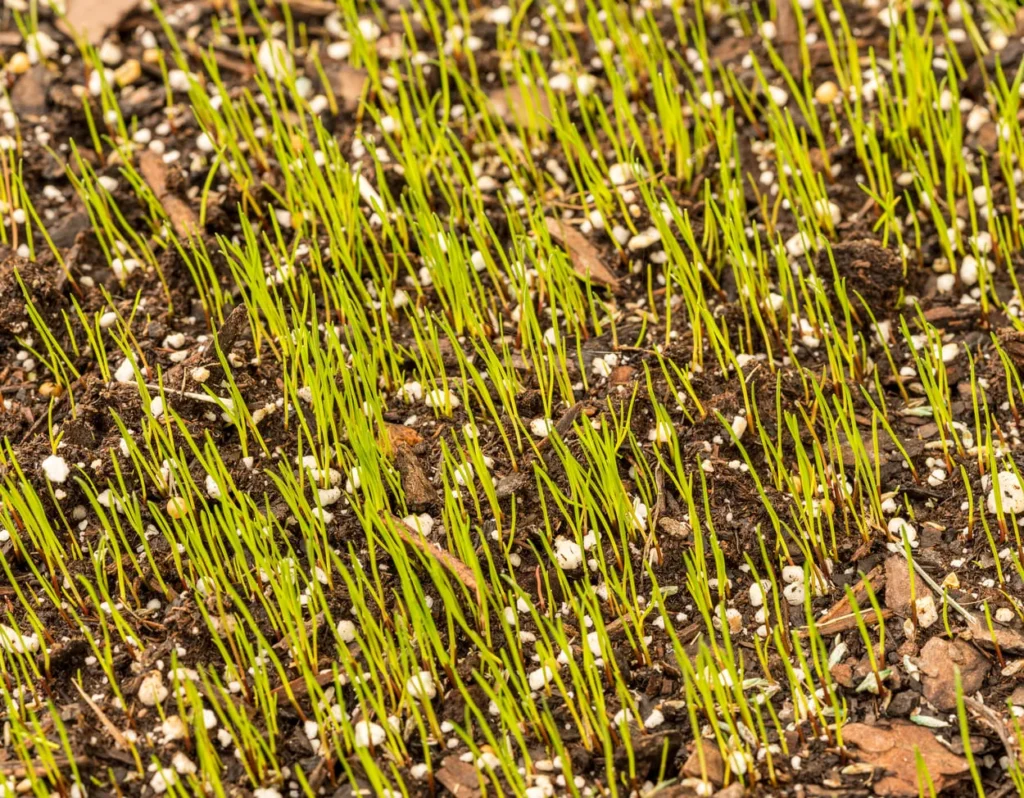
Aeration can prepare the soil for new grass seed.
The holes created by core aeration give seed improved contact with the soil and create favorable locations for germination.
This is one reason homeowners often combine aeration and overseeding.
Instead of simply scattering seed across a compacted lawn surface, aeration creates openings where seed can establish.
When properly timed and maintained, the combination can help improve thin areas and increase lawn density.
Of course, results depend on grass type, weather, moisture, seed quality, soil conditions, and proper aftercare.
Why Professional Aeration Can Be Worth It
A homeowner can rent lawn equipment and attempt aeration independently.
But equipment availability is not the only consideration.
You also need to know:
- When your grass should be aerated
- How much coverage your lawn needs
- Where underground irrigation may be located
- How to handle difficult areas
- Whether overseeding makes sense
- Whether the soil is actually compacted
- What maintenance should follow aeration
A professional service reduces the guesswork.
It also saves you the time and effort of transporting equipment, learning how to operate it, and completing the work yourself.
For homeowners who want a healthier lawn without turning the weekend into a landscaping project, professional aeration can be a practical investment.
Why Choose P&G Landscaping?
Choosing a lawn care company is about more than finding someone with equipment.
You want a team that understands that your lawn is part of your property and that the objective is long-term improvement—not simply completing a service as quickly as possible.
P&G Landscaping focuses on professional lawn and landscaping services for homeowners in North Carolina.
Our approach emphasizes:
Local Knowledge
North Carolina lawns have specific seasonal and environmental considerations. Local experience helps us recommend services based on real lawn conditions rather than generic schedules.
Results-Focused Service
The purpose of aeration is to improve the lawn’s growing environment.
We focus on the reason the service is being performed and how it fits into the property’s broader lawn care needs.
Professional Equipment
Proper equipment allows the job to be completed efficiently and consistently across the lawn.
Clear Recommendations
We do not believe homeowners should pay for services their property does not need.
If your lawn would benefit from aeration, we can explain why. If another lawn care solution makes more sense, that should be part of the conversation too.
Convenient Service
Hiring a professional means you do not have to spend your weekend renting, transporting, operating, and returning heavy lawn equipment.
If your lawn is struggling despite regular maintenance, let P&G Landscaping take a closer look. Request your quote today.
How Our Lawn Aeration Process Works
Getting started should be simple.
Step 1: Contact Us
Call P&G Landscaping or submit a quote request online.
Tell us about your lawn and what you are noticing.
Step 2: Lawn Evaluation
We assess the property’s lawn condition and determine whether core aeration is appropriate.
Step 3: Service Recommendation
If aeration is recommended, we explain the service and any complementary treatments that could make sense.
Step 4: Professional Aeration
Our team performs the core aeration with appropriate equipment and coverage.
Step 5: Next-Step Guidance
We provide recommendations for watering, mowing, overseeding, fertilization, or other lawn care depending on your property’s needs.
The objective is simple: give your grass a better environment in which to grow.
Common Objections About Lawn Aeration
“My lawn already looks okay. Do I really need aeration?”
If your lawn is healthy, growing well, and does not show signs of compaction, aeration may not be an immediate priority.
However, preventive aeration can help maintain favorable soil conditions, particularly on high-traffic properties or lawns with recurring compaction.
“Will aeration damage my lawn?”
Core aeration creates temporary openings in the turf. The process is designed to improve soil conditions and support healthier growth.
When performed at an appropriate time for the grass type, the lawn should recover naturally.
“Will I see results immediately?”
Aeration improves the conditions around the root system, so it is not an instant cosmetic treatment.
You may notice improved water penetration relatively quickly, while visible improvements in turf density and strength depend on growing conditions and follow-up care.
“Is aeration worth the money?”
For lawns affected by compaction, poor water penetration, weak rooting, or heavy traffic, aeration can be a highly useful investment.
The value comes from improving the foundation where grass grows.
“Can I just aerate myself?”
You can, but renting equipment means handling transportation, setup, operation, and cleanup yourself.
Professional service is often more convenient for homeowners who want the job done efficiently and correctly.
Frequently Asked Questions About Lawn Aeration
How often should I use a lawn aeration service near me?
The ideal frequency depends on your grass type, soil conditions, traffic, and level of compaction. Many lawns benefit from annual aeration, while heavily compacted or high-traffic properties may require more attention.
A professional evaluation can help determine the appropriate schedule.
When should I schedule a lawn aeration service near me?
The best timing depends on whether your lawn contains warm-season or cool-season grass and when that grass is actively growing.
In North Carolina, timing should be selected according to the specific turf type and local growing conditions rather than following a generic calendar.
Does core aeration help grass grow thicker?
Yes. By improving air, water, and nutrient movement in the soil and encouraging healthier root development, core aeration can create better conditions for thicker turf growth.
If the lawn is also thin, combining aeration with overseeding may provide additional benefits.
Does aeration help with clay soil?
Core aeration can be particularly useful when soil is dense or compacted. It creates channels that improve the movement of air and water through the soil.
However, severely problematic soil may require additional strategies beyond aeration.
Should I fertilize after aeration?
In some situations, fertilization after aeration can help provide nutrients when the grass is actively growing.
The correct approach depends on grass type, season, soil condition, and the lawn’s current nutritional needs.
Should I overseed after aeration?
Overseeding can be a good complement to aeration when a lawn is thin or has bare areas and the timing is appropriate for the turf type.
Aeration improves seed-to-soil contact by creating openings in the lawn.
How long does lawn aeration take?
The time depends on lawn size, accessibility, soil conditions, and the amount of work required.
A professional can provide a more accurate estimate after evaluating the property.
Are the soil plugs left on the lawn?
Yes. The small cores removed during aeration are normally left on the lawn. They naturally break down over time and return organic material to the soil.
Is core aeration the same as dethatching?
No.
Aeration focuses on relieving soil compaction and improving conditions below the surface.
Dethatching addresses excessive thatch accumulation near the soil surface.
They solve different lawn problems, although some lawns may benefit from both services.
Give Your Lawn a Better Foundation for Growth
A great-looking lawn starts below the surface.
If compacted soil is preventing your grass from getting the air, water, and nutrients it needs, mowing more frequently or adding more fertilizer may not address the real problem.
Core aeration tackles the foundation.
By creating pathways through compacted soil, professional aeration can help improve water penetration, nutrient access, oxygen availability, and root development.
And when healthier roots have room to grow, your lawn has a better opportunity to become thicker, stronger, and more resilient.
If you have noticed thin grass, poor drainage, hard soil, or areas that never seem to thrive, it may be time to have your lawn evaluated.
Looking for a reliable lawn aeration service near me? Contact P&G Landscaping today for a professional assessment and quote.
Don’t wait until compacted soil becomes a bigger lawn problem. Give your grass the space it needs to grow.
Call P&G Landscaping or request your estimate online today.
Areas We Serve
P&G Landscaping provides lawn and landscaping services to homeowners across the Lake Norman and surrounding North Carolina communities, including:
- Mooresville
- Huntersville
- Cornelius
- Davidson
- Troutman
- Sherrills Ford
- Lake Norman
- Charlotte
- Denver
If you are located in or around these communities and need professional lawn aeration, lawn maintenance, landscaping, or related lawn care services, contact our team to discuss your property.