







Most homeowners in North Carolina genuinely care about their lawns. They water, mow, and treat their grass with the best intentions — yet many end up with patchy, yellow, or weed-infested yards season after season.
The problem isn’t effort. It’s strategy.
North Carolina’s climate is unique. Between the humid summers, clay-heavy Piedmont soils, warm-season grasses on the coast, and cool-season grasses in the mountains, there’s no one-size-fits-all approach to lawn care here. What works in Ohio won’t work in Charlotte. What your neighbor does in Asheville might ruin your lawn in Raleigh.
This guide breaks down the five most common lawn care mistakes NC homeowners make — mistakes that cost time, money, and seriously damage curb appeal — along with actionable fixes you can start using today.
📞 Already dealing with a struggling lawn? Call us today for a FREE lawn assessment and personalized care plan.

Mistake #1: Mowing Too Short — The ‘Scalping’ Problem
If you’ve ever seen a lawn turn brown and thin days after mowing, you’ve witnessed scalping firsthand. It’s one of the most widespread lawn care mistakes in North Carolina, and it happens to well-meaning homeowners every week.
The idea seems logical: mow shorter so you don’t have to mow as often. But cutting grass too short does serious damage. It exposes the soil to direct sunlight, causes the grass plant to go into survival mode, and creates openings for weeds like crabgrass to take hold.
The Right Mowing Height for NC Lawns
North Carolina lawns are typically planted with warm-season grasses like Bermuda, Zoysia, or Centipede — or cool-season varieties like Tall Fescue in the Piedmont and mountain regions. Each has its own ideal mowing height:
- Bermudagrass: 1 to 1.5 inches
- Zoysiagrass: 1.5 to 2 inches
- Centipedegrass: 1.5 to 2 inches
- Tall Fescue: 3 to 4 inches (especially during summer stress)
A good rule of thumb: never remove more than one-third of the blade height in a single mowing. This keeps your lawn thick, green, and competitive against weeds — without the stress of scalping.
Pro Tip: Dull mower blades tear the grass instead of cutting it cleanly, leaving ragged edges that turn brown and invite disease. Sharpen your blades at least twice per season.
Mistake #2: Watering at the Wrong Time — and the Wrong Amount
Watering your lawn seems simple enough. But incorrect irrigation is one of the top reasons North Carolina lawns struggle — even among homeowners who water consistently.
Here are the two most damaging watering mistakes:
Watering in the Evening
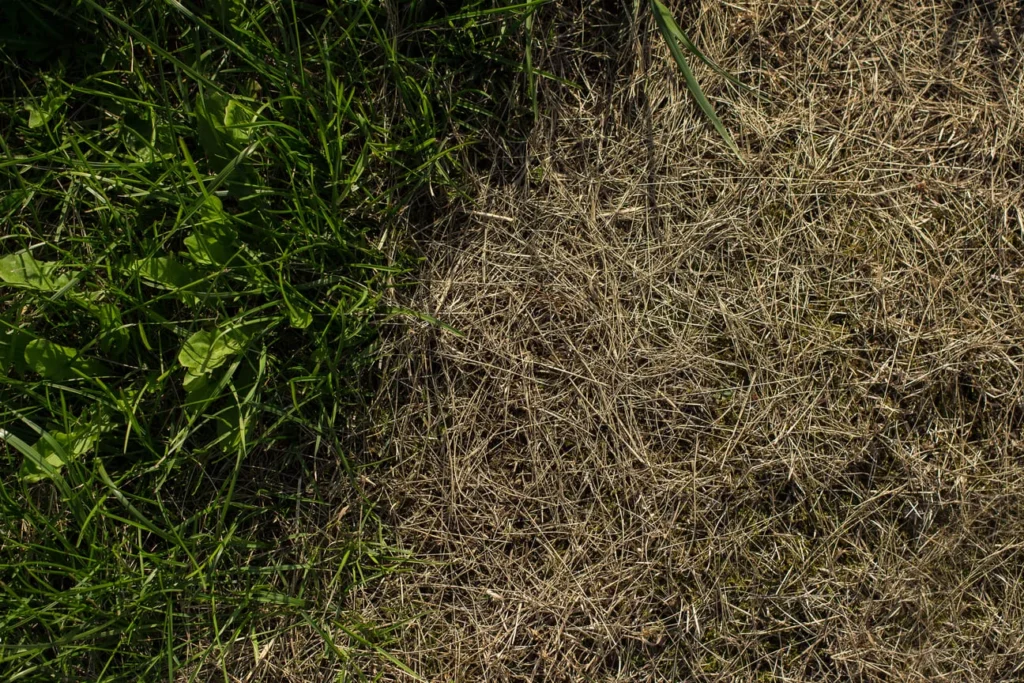
When you water at night, moisture sits on grass blades for hours. This creates the perfect environment for fungal diseases like Brown Patch and Dollar Spot, both of which are extremely common in NC’s warm, humid climate. Evening watering essentially turns your lawn into a petri dish overnight.
The fix: Always water in the early morning — between 4 AM and 9 AM. This gives the grass time to absorb moisture before the afternoon heat, and lets the surface dry before nightfall.
Watering Lightly and Frequently
Frequent shallow watering trains grass roots to stay near the surface. When summer heat arrives and the top inch of soil dries out fast, those shallow roots can’t sustain the plant. The result is drought stress even when you’re watering.
Instead, water deeply and infrequently. Most North Carolina lawns need about 1 to 1.5 inches of water per week during the growing season. It’s better to water once or twice per week for longer periods than five times a week for a few minutes.
Struggling with brown patches or fungal issues? Our lawn care specialists in North Carolina diagnose and treat the root cause — not just the symptoms. Request a quote today.
Mistake #3: Fertilizing on the Wrong Schedule
Fertilizer is one of the most powerful tools in lawn care — and one of the most misused. Applying the wrong product at the wrong time is one of the costliest lawn care mistakes homeowners in NC make, and it can set your lawn back by an entire growing season.
Fertilizing Warm-Season Grass Too Early
Many homeowners follow the urge to fertilize in early spring, as soon as the temperature starts rising. The problem? Warm-season grasses like Bermuda and Centipede aren’t ready for nitrogen in early spring. Applying fertilizer before the grass fully exits dormancy stimulates early growth that’s highly vulnerable to late frost damage.
For warm-season grasses in North Carolina, wait until after the last frost and the soil temperature reaches at least 65°F before applying nitrogen. That’s typically late April to mid-May across most of the Piedmont.
Using the Wrong Fertilizer for NC Soil
North Carolina soils vary dramatically. The clay soils of the Piedmont behave very differently from the sandy soils of the coastal plain. Without a soil test, you’re guessing — and guessing wrong often means over-applying phosphorus that your lawn doesn’t need, or missing a critical potassium deficiency.
A simple soil test from your county’s NC State Extension office costs just a few dollars and tells you exactly what your soil needs. It’s one of the smartest investments a homeowner can make.
Did you know? Overfertilizing with nitrogen causes excessive top growth, weakens root systems, and increases disease susceptibility. More fertilizer doesn’t mean a better lawn.
Mistake #4: Ignoring Weed Control Until It’s Too Late
Here’s the hard truth about weeds: by the time you can see them clearly in your lawn, they’ve already won the early battle. Waiting until weeds are visible before acting is one of the most common — and most frustrating — lawn maintenance errors North Carolina homeowners make.
The Importance of Pre-Emergent Herbicides
Pre-emergent herbicides don’t kill existing weeds. They prevent weed seeds from germinating in the first place. Applying them at the right time is everything.
In North Carolina, the most problematic warm-season weed is crabgrass. The window to apply pre-emergent for crabgrass control is narrow: when soil temperatures reach 50 to 55°F for several consecutive days — typically late February to mid-March in the Piedmont. Miss this window, and you’ll be battling crabgrass all summer.
Post-Emergent Herbicides — Know Your Grass Type
Once weeds are up and growing, post-emergent herbicides are your best tool. But not all herbicides are safe for all grass types. Using the wrong product on Centipedegrass, for example, can cause more damage than the weeds themselves.
Always confirm your grass species before treating, and read labels carefully. Better yet, let a lawn care professional in North Carolina handle this — getting it wrong is far more expensive than getting it right the first time.
Weeds taking over your yard? Our NC lawn care team uses precision weed control tailored to your specific grass type and soil. Call now for a free consultation.
Mistake #5: Skipping Aeration and Overseeding
If your lawn looks okay but never looks great — if it’s thin, slow to green up in spring, or struggles through summer — the issue might be happening underground. Soil compaction and lack of overseeding are two of the most overlooked problems in residential grass care in North Carolina.
What Soil Compaction Does to Your Lawn
Over time, foot traffic, heavy clay soils, and repeated mowing compact the soil. Compacted soil prevents water, oxygen, and nutrients from reaching grass roots. No matter how much you fertilize or water, the results will be disappointing if the soil is too dense to absorb what you’re giving it.
Core aeration — the process of pulling small plugs of soil from the ground — relieves compaction, improves drainage, and opens the door for new seed and fertilizer to take effect. For most NC lawns, aerating once per year is sufficient. The best timing for warm-season grasses is late spring; for Fescue, it’s early fall.
Why Overseeding Matters in the Piedmont and Beyond
Tall Fescue, the most common cool-season grass in central North Carolina, does not spread laterally the way warm-season grasses do. Every year, heat, drought, and disease thin out the stand — and without overseeding, bare spots accumulate over time.
Overseeding in early fall (September to October) pairs perfectly with aeration. The seed falls into the aeration holes, makes soil contact, and germinates before winter while temperatures are still favorable.
Skipping this annual ritual is one of the most underestimated lawn maintenance errors for Fescue homeowners across the NC Piedmont.
Signs Your Lawn Needs Professional Lawn Care in North Carolina
Sometimes DIY lawn care just isn’t enough. Here are clear signals that it’s time to call in a professional:
- Persistent brown or yellow patches that don’t improve with watering
- Heavy weed pressure despite regular treatment attempts
- Thin, bare areas that reappear after reseeding
- Fungal disease (rings, gray patches, or cottony growth on blades)
- Lawn that looks good in spring but burns out every summer
- Uneven color or texture across different parts of the yard
- Grubs, armyworms, or other pest damage
If any of these sound familiar, you’re not alone — and you’re not out of options. A professional lawn care company in NC has the tools, expertise, and local knowledge to diagnose what’s actually happening and build a plan that works for your specific grass, soil, and microclimate.
Unsure what’s wrong with your lawn? Our experts provide a detailed lawn health assessment — 100% free. Fill out our quick online form or call today. No pressure, no obligation.
What Our North Carolina Lawn Care Service Includes
We don’t offer cookie-cutter packages. Every lawn we treat gets a customized plan built around its actual condition, grass type, and location in North Carolina.
Here’s what you get when you work with us:
- Soil testing and analysis to identify nutrient gaps before we apply anything
- Customized fertilization program timed to your grass type and NC’s seasonal calendar
- Pre- and post-emergent weed control using products matched to your specific grass
- Fungicide treatments for Brown Patch, Dollar Spot, and other common NC diseases
- Core aeration and overseeding for thin or compacted lawns
- Grub and surface insect control to protect root systems
- Ongoing monitoring and seasonal adjustments — because NC weather is unpredictable
Every service is performed by trained, licensed professionals who understand North Carolina’s unique growing conditions. We don’t guess. We test, analyze, and apply with precision.
Our Simple 3-Step Process
1. Free Lawn Assessment We visit your property, evaluate your lawn’s current condition, test the soil, and identify your grass type. This gives us the full picture before recommending anything. There’s zero obligation at this stage.
2. Custom Care Plan Based on your assessment, we build a treatment plan tailored to your lawn, your goals, and your budget. We explain every step and answer every question — no technical jargon, no upselling you on services you don’t need.
3. Ongoing Service and Results We implement your plan, monitor progress, and adjust as needed throughout the year. You’ll have a direct line to your technician and receive updates after every visit.
Most of our clients see measurable improvement within 30 to 60 days of starting service.
Why Homeowners Across North Carolina Choose Us
There’s no shortage of lawn care companies in NC. So why do homeowners in Charlotte, Raleigh, Durham, and beyond keep choosing us?
- Local expertise: We know NC soils, NC grasses, NC weather patterns, and NC pests. We’re not a national franchise following a generic playbook.
- Transparent pricing: You know exactly what you’re paying for before any service begins. No surprises on your invoice.
- Licensed and insured: Every technician on our team is trained and certified. Your lawn — and your property — are in safe hands.
- Results-driven approach: We don’t count visits, we count results. If something isn’t working, we adjust — at no additional cost.
- Real communication: You’ll never wonder what we did or why. We leave detailed service notes after every visit and are always reachable by phone or text.
Join hundreds of North Carolina homeowners who’ve transformed their lawns with professional care. Get your free quote — takes less than 2 minutes.
Frequently Asked Questions About Lawn Care in North Carolina
What are the most common lawn care mistakes in North Carolina?
The top lawn care mistakes North Carolina homeowners make are: mowing too short (scalping), watering at night or too shallowly, fertilizing at the wrong time of year, ignoring pre-emergent weed control, and skipping annual aeration and overseeding. Each of these issues compounds over time and can turn a struggling lawn into a near-total loss without professional intervention.
When is the best time to fertilize a lawn in North Carolina?
Timing depends on your grass type. Warm-season grasses like Bermuda and Zoysia should be fertilized from late April through August. Cool-season grasses like Tall Fescue do best with fall fertilization (September to November) and a light spring feeding. Avoid applying nitrogen to warm-season grasses in early spring before soil temperatures reach 65°F.
How often should I water my lawn in NC during summer?
During summer, most North Carolina lawns need 1 to 1.5 inches of water per week. Water deeply 1 to 2 times per week in the early morning rather than light, frequent watering. This encourages deep root growth and reduces the risk of fungal disease.
Do I really need to aerate my lawn every year?
For most North Carolina homeowners — especially those with clay soils in the Piedmont — annual aeration makes a significant difference. It relieves compaction, improves water and nutrient absorption, and creates the ideal environment for overseeding. Skipping it year after year is one of the most common lawn maintenance errors we see.
What lawn care mistakes in North Carolina lead to fungal disease?
The most direct contributors to fungal disease in NC lawns are evening watering, excessive nitrogen application in summer, mowing wet grass, and scalping. North Carolina’s heat and humidity already create ideal fungal conditions during summer — anything that adds moisture or weakens the grass plant increases the risk substantially.
Is professional lawn care worth the cost in North Carolina?
For most homeowners, yes. Consider the time, trial-and-error, and product costs of DIY lawn care — especially when mistakes lead to damage that takes an entire season to reverse. Professional lawn care in North Carolina provides expert diagnosis, properly timed treatments, and guaranteed results, usually at a cost competitive with doing it yourself once you factor in everything.
How do I know what type of grass I have in my NC lawn?
The easiest way is to contact a local lawn care professional or your county’s NC State Cooperative Extension office. Knowing your grass type is essential before applying any herbicide, fertilizer, or pest control product. Using the wrong product on the wrong grass type can cause permanent damage.
Ready for a Lawn You’re Actually Proud Of?
You’ve put in the work. You deserve to see results.
Avoiding these five lawn care mistakes is a great start — but getting professional help is what takes a North Carolina lawn from average to exceptional. Our team brings local expertise, proven systems, and a genuine commitment to making your lawn thrive through every NC season.
Whether you’re dealing with weeds, thin Fescue, compacted soil, fungal issues, or just a lawn that’s never looked the way you wanted — we can help.
📞 Call Us Today | Request a Free Quote Online | Book Your Free Lawn Assessment
Serving Moresville, Huntersville, Davidson, Troutman, Sherrills Ford, and surrounding communities across North Carolina.
Licensed | Insured | Local Experts | Satisfaction Guaranteed